


Traditional Bologna Spaghetti
 |
|
 |
 |
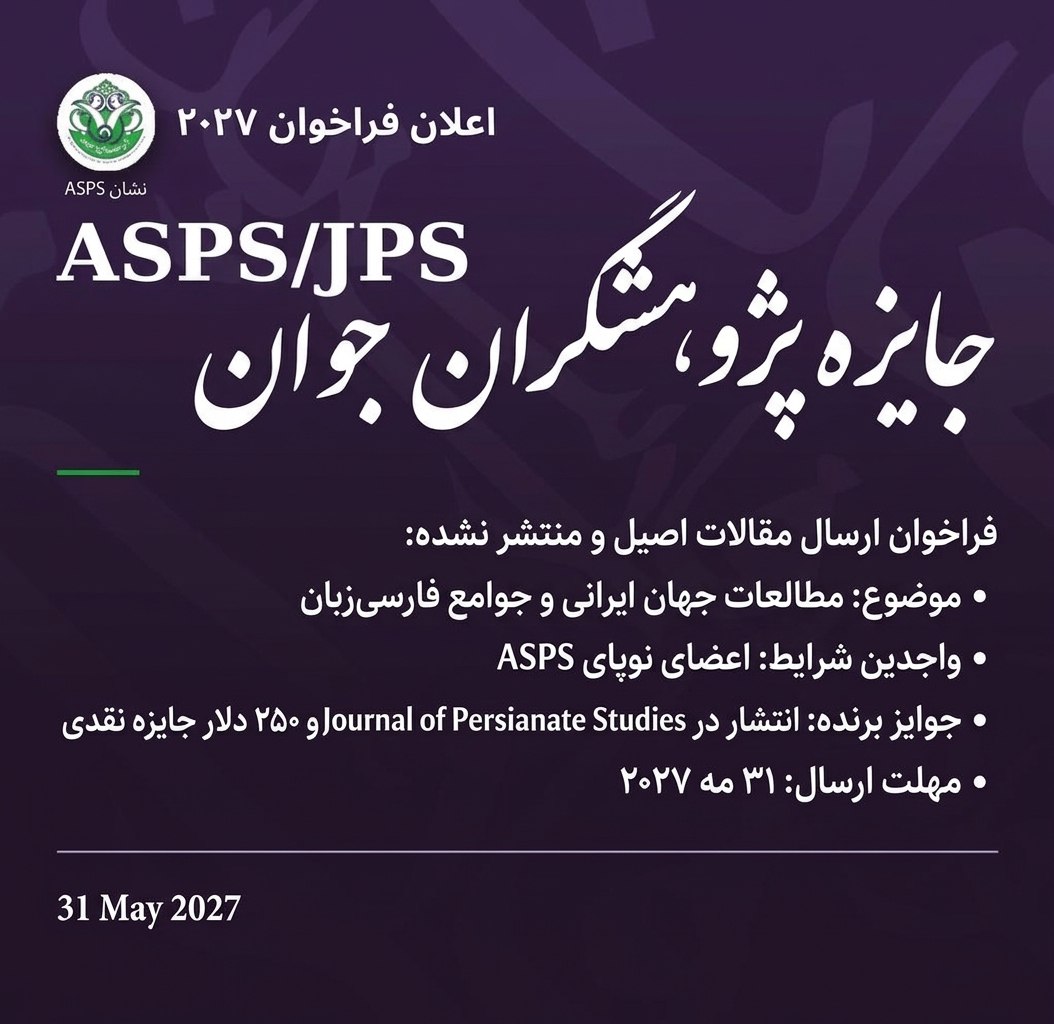
🏆 Call for the 2027 ASPS/JPS Early Career Prize
The Association for the Study of Persianate Societies (ASPS), in collaboration with the *Journal of Persianate Studies* (JPS), is pleased to announce the 2027 Early Career Prize.
📊 Evaluation Criteria:
Creativity in the selection of the research topic and sources
Originality and innovation in scholarly analysis
The overall contribution and scholarly value of the project
The winner will be selected by an ASPS jury and announced at the Association’s upcoming conference in Dushanbe (August 2027). Additionally, submissions deemed worthy of recognition (runners-up) will be considered for publication.
🔗 For more information and to submit your work, please visit our website:
https://www.persianatesocieties.org/announcing-the-2027-asps-jps-early-…
 |
The day the proclamation of Cyrus the Great was made public in Babylon, a new era in world history undoubtedly began. With this declaration, the ancient era of the East—characterized by the power and dominance of the kings of Assyria and Babylon, who sought the total destruction of everything belonging to the peoples they conquered—gave way to a new age. In this period, the Persian monarchs adopted a philosophy of governance rooted in benevolence toward subject peoples and tolerance for their beliefs. They pursued a policy of coexistence, under which—without resorting to violent coercion to forcibly integrate the diverse peoples and elements within their empire—they incorporated the valuable and enduring aspects of every nation and race into their own composite culture.
The world that emerged with the proclamation of Cyrus the Great—though it could not always remain perfectly aligned with its founding principles, and inevitably deviated from them at times due to changing circumstances—was fundamentally different from the ruthless, harsh, and intolerant world of the ancient Eastern empires. Unlike Assyria and Babylon, which would consign enemy cities—along with their inhabitants and temples—to total annihilation, the Achaemenid regime, even amidst the most severe upheavals, never abandoned subject peoples and nations to unbridled wrath. Throughout this entire era, not a single civilization was extinguished by the Persian monarchs, nor was any people or nation destroyed. The policy of tolerance established by Cyrus—which remained largely in effect throughout the Achaemenid era—ensured the unity of the Achaemenid Empire. At the same time, it transformed the realm of the Great Kings into a bridge spanning East and West, the old and the new, and the material and spiritual worlds. From this, a composite culture emerged—one that engaged the diverse and disparate forces within the empire, fostering their participation and a shared sense of investment in this collective enterprise. This tolerance not only facilitated the blending of religious beliefs and customs—while simultaneously preserving mutual respect among various faiths and creeds—but also promoted cooperation among different peoples in the realms of commerce and industry.