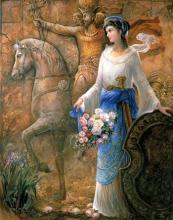

VENUS


Do you hear the sound? It is the sound of history’s footsteps.
Parseh is awake, and Persia... shall never be silenced.
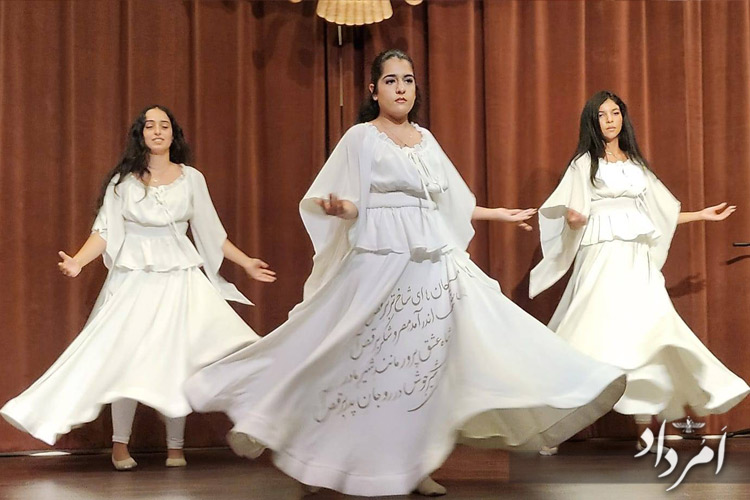

Amadeus - O.S.T LP-A Side (1984) The most part of all my Achievements during entire life belongs to this unique piece of ART

MONTAZERI.ORG

The Shahnameh of Florence is a significant Persian manuscript associated with Ferdowsi’s monumental Shahnameh, one of the greatest works of Persian literature and a cornerstone of Iran’s cultural heritage. Preserved in Florence, Italy, the manuscript reflects the enduring transmission of Ferdowsi’s epic tradition through the Persianate world. Its textual, calligraphic, and artistic features provide valuable insight into the preservation, interpretation, and visual representation of Persia’s legendary history, heroic traditions, and cultural memory.
Immortality in Stone & Color: A Tribute to Master Abolhassan Khan Seddighi

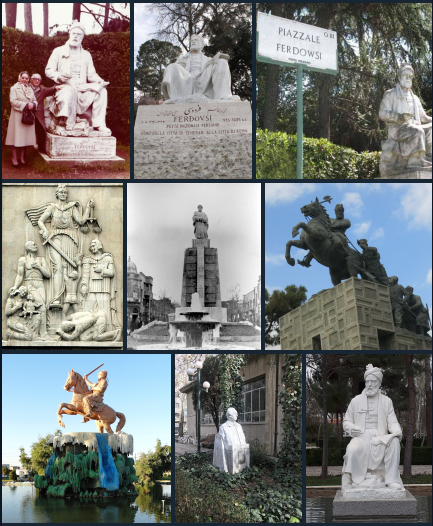
October 5 marks the birth anniversary of one of the greatest pioneers of modern Iranian visual art and sculpture, Master Abolhassan Khan Seddighi (1897–1995), a distinguished student of the school of Kamal al-Molk. Through his remarkable talent, he transformed the history and mythology of Iran into enduring works of stone and bronze.

Today, wherever we walk across Iran and beyond, we can encounter the lasting legacy of his art in remarkable works such as:

  • The magnificent statue of Ferdowsi in Ferdowsi Square, Tehran
  • The distinguished statue of Ya'qub ibn al-Layth al-Saffar in Zabol
  • The statue of the philosopher Omar Khayyam in Laleh Park, Tehran
  • The monumental statue of Nader Shah Afshar in Mashhad
  • And his enduring depiction of the face of Avicenna

Each of these works bears witness to his exceptional skill, distinctive artistic vision, and deep commitment to his art.

Attached image: A historic and memorable photograph of Master Abolhassan Khan Seddighi alongside his wife, Lady Qodrat al-Sadat Mirfendereski, beside the statue of Ferdowsi at the Villa Borghese in Rome.
Katayoun Faranak

By admin , 22 August, 2026

The Daughter of the Caesar of Rome, Wife of Goshtasp, and Mother of Esfandiyar

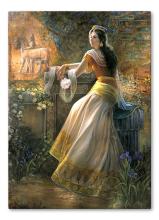
Kayāun, known as Katayoun, is the daughter of the Caesar of Rome, the wife of Goshtasp, and the mother of Esfandiyar and Farshidvard (Farsh-Āvard). According to a precise reference in the Shahnameh, her original name was Nahid:

By admin , 26 August, 2026

The Daughters of Goshtasp

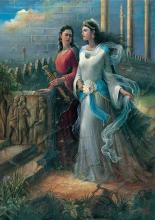
Humāy and Beh-Āfarīd, the daughters of Goshtasp and sisters of Esfandiyār, are referred to by different names in various sources.¹ According to the Shāhnāmeh, they are “wise”, “fortunate”, and “noble” daughters, whose faces “had never been seen by the wind”; yet fate condemns them to captivity among the Turks, “with pain and grief, and faces like lamps”:

By admin , 25 August, 2026

Shahrnaz & Arnavaz, according to the Shahnameh, are the sisters of Jamshid and are the first women whose names Ferdowsi mentions. He bestows upon them such epithets as “pure,” “veiled,” and “chaste”:

Two pure women from the house of Jamshid
Were brought forth, trembling like a willow;

For both were sisters of Jamshid,
And were as crowns upon the heads of noble women.

Of the veiled women, one was Shahrnaz,
And the other, chaste Arnavaz by name.

(Book One, The Reign of Zahhak, 55: 6–8)

By admin , 24 August, 2026

A Different Portrayal of Rostam’s Beloved

Tahmineh, the only daughter of the King of Samangan, Rostam’s wife and Sohrab’s mother, is a beautiful, chaste, courteous and humble woman: loyal, independent, perceptive and wise, highly knowledgeable, passionate and spirited, courageous, calculating, forthright and determined in pursuing her goals, and committed to her decisions. Through her brief yet distinctive presence, she brings about the most tragic story in the Shahnameh.

By admin , 23 August, 2026

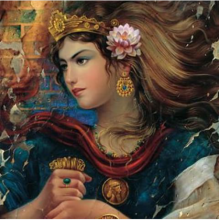
Faranak, the wife of Abtin and the mother of Fereydun, is portrayed in the Shahnameh as a free-spirited, knowledgeable and thoughtful woman, compassionate and generous, a vigilant and well-organised fighter, and a caring and affectionate mother. Her character and functions can, broadly, be divided into three categories: 1. a conscious and freedom-seeking warrior; 2. a devoted mother; and 3. a generous and humanitarian individual.